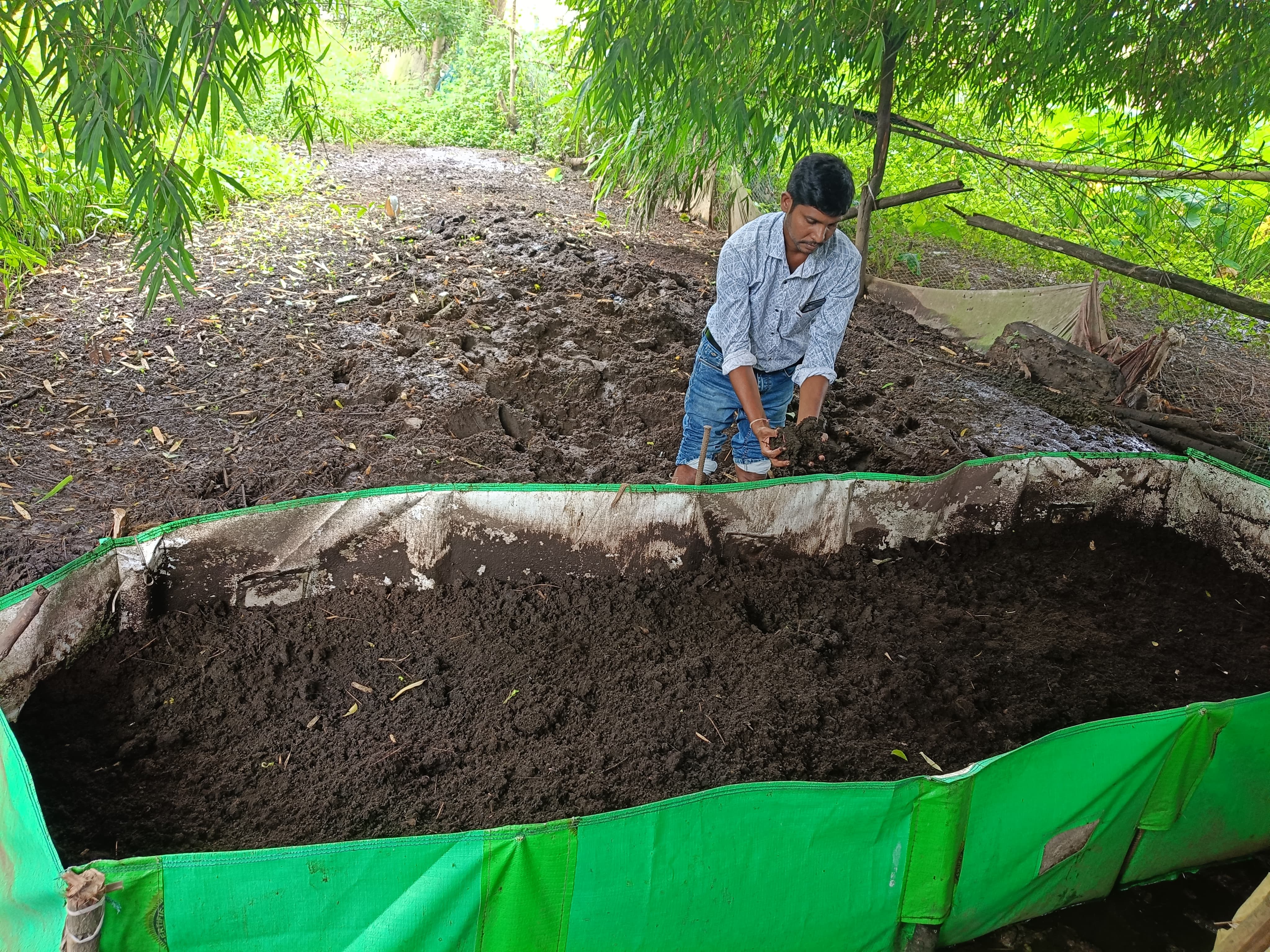
Badrika Mahanta, a resident of Dampur village under Kandra Gram Panchayat, balances two roles—working as a school teacher while also practicing farming, a tradition passed down from his father. For years, his paddy and vegetable crops depended heavily on chemical inputs. Though educated and deeply interested in farming, he had little exposure to organic methods.
This dependency came with challenges. Rising input costs strained household income, while long-term soil productivity continued to decline. With limited land for large-scale composting, shifting to sustainable practices seemed difficult.
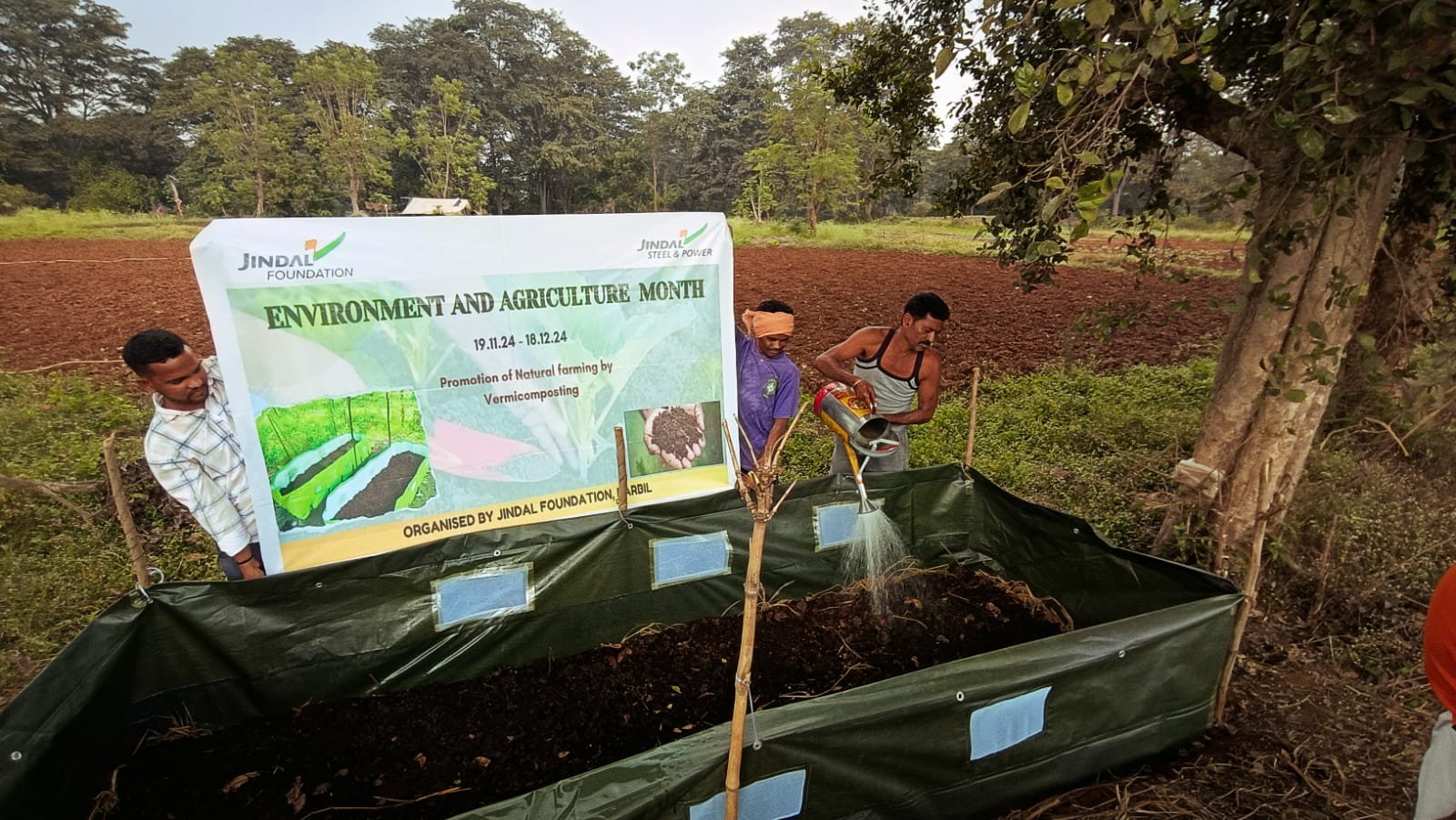
That changed in March 2025, when Jindal Foundation, under its sustainable agriculture initiative, provided him with an HDPE vermi-composting sheet. On a small plot beside his house, he began composting with 200 kg of cow dung, straw, and kitchen waste. The process was simple, cost-effective, and manageable alongside his teaching duties. By June, the compost had matured, ready for use.
The results were encouraging. From this effort, Badrika harvested around 200 kg of nutrient-rich vermi-compost. He applied it to his kitchen garden, cultivating brinjal and cucumber across 300 plants. The vegetables were healthier, free from chemical pesticides, and well-received in the local market at prices between ₹50–₹60 per kg. Beyond this, he plans to sell vermi-compost at ₹30 per kg, opening up an additional income stream.
His experience is inspiring other farmers in the community to try similar practices, showing that sustainable agriculture can be both practical and profitable.
His journey shows how accessible, small-scale interventions can help farmers reduce dependency on chemicals, improve soil health, and create new income opportunities—paving the way for more resilient and eco-friendly farming communities.